Showing posts with label Todd Janes. Show all posts
Showing posts with label Todd Janes. Show all posts
Sunday, May 8, 2011

Wednesday, May 4, 2011
Leaving on a Jet Plane

Hello?
Maybe you remember me?
It's me Todd.
I know, it seems like so long since we have chatted, since I paid attention to you…
Well tomorrow morning - early, I depart Edmonton and fly to Montreal for a exciting week of research creation.
I was invited many months ago by the amazing Karen Spencer and Anne Bertrand for a project at Skol. They have called it teasing the furtive or gosser le furtif which is an on-going curatorial project curated by Karen Elaine Spencer. Read more about this and the great furtives (that what I call them) at http://teasingthefurtive.wordpress.com
Karen is awesome and I fell into love with her work by just reading about it many years ago and I have had the pleasure of curating her and working with her. While this will not do the work justice it often threads social justice and is often situated by the voices of disenfranchised people - often manifesting as one voice that is a collective of many. We are very similar in many ways in terms of our practice and our activities - but she is constant, focused, driven and prolific. Please read her at
http://likewritingwithwater.wordpress.com
Okay, I have to go pack - eight days - me being an artist - no work - limited emails - lots of talking, drinking, watching, and I hope be being ... silent.
Friday, July 2, 2010
Pre Monument post
So I have been invited by co-curators Kristen Hutchinson and Jennifer Rae Forsyth to be part of their three-day, interventionist piece for the Works Visual Arts Festival. The Works is a ten day festival that runs the full gambit of visual culture from crafts to performance to art and design to all level of creation and skills. I should also let you know this year is the 25th year of the festival and it is situated primarily in downtown Edmonton and mainly concentrated on Sir Winston Churchill Square - Edmonton's offering of a civic square - directly smack dab in the "Arts District" surrounded by the new shiny Art Gallery of Alberta, the Winspear (Symphony and Opera), the Citadel Theatre, the main branch of the Edmonton Public Library, and City Hall. It is mainly populated by festivals throughout the summer and combined with under-housed youth and office workers - I am certain you can perhaps find every type of person in the Square.
The project begins on Sunday morning at 9 a.m. when the co-curators start adhering poster copies of the visual artist's (involved in the project) images - they each get two - one for the inside of the make shift structure and one for the outside. We performance artists are suppose to respond to the images and works of the artists as well as responding - or not responding to the works through performance. Did I mention that the curators are installing the images beginning at 9 a.m. and my performance begins at noon? While I am not new to improvised performance and am fairly seasoned at this I feel that in some ways this raises the stakes for me in terms of my performance work. I am outside, they will probably be lots of people and I am going in fairly blind as both the first performer and first into the space.
Over the past few years my work has taken some significant shifts and is fairly strongly ensconced into relational performances - my interactions with one or a very few people at a time. My work has also shifted very much away from cabaret environments to that of work on the streets and perhaps most significantly into work that is deeply centered around intimacy - intimacy with strangers, intimacy with spaces - both physical and psychological.
Deep breath.
…
This is truly my first public performance since my long hospitalization and I am nervous - perhaps a wee bit scared. I recently went to a doctors appointment at the hospital and they read my file as still MRSA positive and quickly isolated me - cap, gloves, gowns, and mask interactions only. I am again out on the street, touching, smelling, interacting with people - I still feel both leper and victim at the same time…
Thinking about the piece and the project and my own work; the theme of the festival this year centers around earth. I have some ideas to explore.
The project begins on Sunday morning at 9 a.m. when the co-curators start adhering poster copies of the visual artist's (involved in the project) images - they each get two - one for the inside of the make shift structure and one for the outside. We performance artists are suppose to respond to the images and works of the artists as well as responding - or not responding to the works through performance. Did I mention that the curators are installing the images beginning at 9 a.m. and my performance begins at noon? While I am not new to improvised performance and am fairly seasoned at this I feel that in some ways this raises the stakes for me in terms of my performance work. I am outside, they will probably be lots of people and I am going in fairly blind as both the first performer and first into the space.
Over the past few years my work has taken some significant shifts and is fairly strongly ensconced into relational performances - my interactions with one or a very few people at a time. My work has also shifted very much away from cabaret environments to that of work on the streets and perhaps most significantly into work that is deeply centered around intimacy - intimacy with strangers, intimacy with spaces - both physical and psychological.
Deep breath.
…
This is truly my first public performance since my long hospitalization and I am nervous - perhaps a wee bit scared. I recently went to a doctors appointment at the hospital and they read my file as still MRSA positive and quickly isolated me - cap, gloves, gowns, and mask interactions only. I am again out on the street, touching, smelling, interacting with people - I still feel both leper and victim at the same time…
Thinking about the piece and the project and my own work; the theme of the festival this year centers around earth. I have some ideas to explore.
Saturday, May 1, 2010
newish project
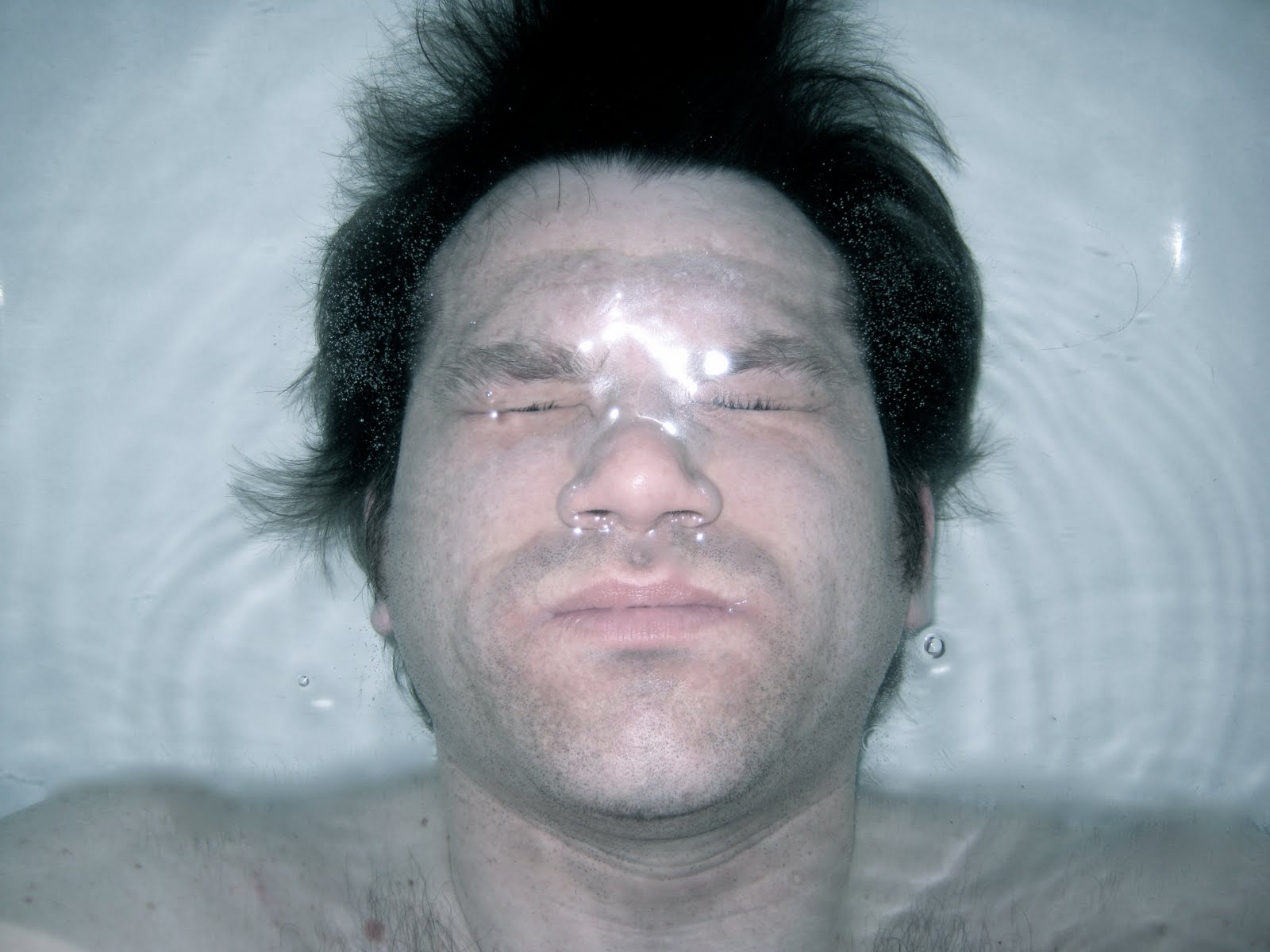
So it has been awhile since I posted.
I have been working on a newish project - newish in terms it is more about documenting and research than an actual performance. My friend Jennifer Mesch emailed me that she read my blog - I was a little surprised anyone found it and moreso that she read it.
So this new research project involves me photographing myself in vulnerable positions situations. Never truly being totally at ease with my body - and even more since my injury and attack over two years ago where my collar bone was broken and - well it never seemed to heal 100 per-cent and now I am slightly deformed with a lovely large bump where my clavicle fused back together.I guess that now I have something in common with my oldest brother Brian as he broke his clavicle as well - I think from hockey and not by being jumped and attacked by a strung out street person. My range of motion has been limited ever since and I cannot sleep in my favourite position and cannot do some of teh things I used to do - so I adapt. Right?
The project involves the idea of me placing myself in vulnerable positions, poses, or other constructs - physical and emotional to break down fears and attitudes and situate myself in ways that creates intimate positions/situations that hopefully connect with others in intimate or disarming ways.
Here is an example of one of the images and it is currently my facebook picture. And since Facebook is so much about portraiture and positioning yourself as image identity a la Krzysztof Wodiczko's Alien Staff.
Wednesday, November 19, 2008
Bath House
So here is what I was trying to create or attempt for the performance at Bath House, which is a project coordinated by myself, Ted Kerr, Heather Zwicker and Marshall Watson for Exposure festival, which is Edmonton's Queer Arts and Culture festival.
Todd Janes
Tea Room
Project Description
The bathhouse is a mysterious site for many as it is a space associated with both shame and liberation; anonymity and sexuality; power and vulnerability.
I would like to propose a durational performance art piece for Bath House. I envision this as a site-specific work that would play with constructs of intimacy and domesticity between strangers. I also feel that there are often desires and flirtations that do not include sex, but are sexual and very intimate and also that sometimes sex is just an act or a function to fulfill a need, want or desire.
On May 30, 1981 in Edmonton, police raided the Pisces Spa, which resulted in sixty men being charged as keepers or found-ins in common bawdyhouse. The accused were questioned at a specially arranged 5 am courtroom session permitted under little-used section of Criminal Code. It is my desire to situate an action that is mundane and intimate within this space that is steeped in tradition. I propose to occupy one of the bathhouse rooms and invite other back to the room for some tea, conversations and snacks, over a fifteen-minute period. This meeting would be negotiated between myself and the other person, or two. I intend to perform all the time between 7 to 11 p.m. with two fifteen minute breaks during the evening.. I did ten minute segments, some went longer and I had no break and went for the full four plus hours.
Why Tearoom
Restroom facilities were probably first used for sex in the days before indoor plumbing. In crowded urban areas, where families and neighbors lived in close quarters and privacy was nonexistent, sex could take place unobserved in outhouses.
By the late 19th century, many cities were overcrowded and had poor sanitation. For public health purposes, public restrooms were built in parks and near transportation facilities. Called "comfort stations," these restrooms dotted the landscape in cities from New York to Seattle. However, some men quickly began to use them for a different kind of comfort. As early as 1896, the public facilities in Manhattan's Battery Park and City Hall Park were associated with homosexual activity. The public men's room beneath Seattle's Pioneer Square was a popular cruising area by the first decades of the 20th century. During the 1930s, the Works Progress Administration (WPA) put the unemployed to work building hundreds of public restrooms in parks across the country, thus giving an inadvertent boost to tearoom activity.
Though it's unclear when and where it originated, the slang term "tearoom" (that is, "t-room," which was short for "toilet-room") enabled men to discuss their public sexual encounters with each other in a coded way. Heterosexuals understood tearooms very differently, as genteel cafes where people enjoyed afternoon tea and pastries.
One historian notes that, ironically, the use of public facilities for homosexual encounters gave men a measure of privacy. Sex in city parks was risky because it was out in the open. For many poor and working-class men, then, public restrooms doubled as private sexual space. The washrooms of New York's subway system were "(the) meeting place for everyone," as one man put it. A businessman on his way home to his wife and children in one of the outer boroughs could engage in quick sex at the end of the workday but still not identify as gay. With the growth of suburbs after World War II, tearoom activity shifted away from urban centers to rest stops on the highways that surrounded cities.
From the very beginning, tearooms fell under police scrutiny. The first arrests in Manhattan occurred soon after the opening of public facilities in 1896. To circumvent arrest, one man would often remain outside the restroom as a lookout, warning those inside if a policeman was approaching. An arrest could ruin a man's life: When newspapers published the names and addresses of those arrested, men lost families, jobs, and housing.
I feel that this is important to situate this title within this work as it still illustrates the need or desire to have spaces that are sites of intimacy for men who have sex with men (MSM) or for individuals that fit within the notorious categories of sexual outlaws.
Todd Janes
Tea Room
Project Description
The bathhouse is a mysterious site for many as it is a space associated with both shame and liberation; anonymity and sexuality; power and vulnerability.
I would like to propose a durational performance art piece for Bath House. I envision this as a site-specific work that would play with constructs of intimacy and domesticity between strangers. I also feel that there are often desires and flirtations that do not include sex, but are sexual and very intimate and also that sometimes sex is just an act or a function to fulfill a need, want or desire.
On May 30, 1981 in Edmonton, police raided the Pisces Spa, which resulted in sixty men being charged as keepers or found-ins in common bawdyhouse. The accused were questioned at a specially arranged 5 am courtroom session permitted under little-used section of Criminal Code. It is my desire to situate an action that is mundane and intimate within this space that is steeped in tradition. I propose to occupy one of the bathhouse rooms and invite other back to the room for some tea, conversations and snacks, over a fifteen-minute period. This meeting would be negotiated between myself and the other person, or two. I intend to perform all the time between 7 to 11 p.m. with two fifteen minute breaks during the evening.. I did ten minute segments, some went longer and I had no break and went for the full four plus hours.
Why Tearoom
Restroom facilities were probably first used for sex in the days before indoor plumbing. In crowded urban areas, where families and neighbors lived in close quarters and privacy was nonexistent, sex could take place unobserved in outhouses.
By the late 19th century, many cities were overcrowded and had poor sanitation. For public health purposes, public restrooms were built in parks and near transportation facilities. Called "comfort stations," these restrooms dotted the landscape in cities from New York to Seattle. However, some men quickly began to use them for a different kind of comfort. As early as 1896, the public facilities in Manhattan's Battery Park and City Hall Park were associated with homosexual activity. The public men's room beneath Seattle's Pioneer Square was a popular cruising area by the first decades of the 20th century. During the 1930s, the Works Progress Administration (WPA) put the unemployed to work building hundreds of public restrooms in parks across the country, thus giving an inadvertent boost to tearoom activity.
Though it's unclear when and where it originated, the slang term "tearoom" (that is, "t-room," which was short for "toilet-room") enabled men to discuss their public sexual encounters with each other in a coded way. Heterosexuals understood tearooms very differently, as genteel cafes where people enjoyed afternoon tea and pastries.
One historian notes that, ironically, the use of public facilities for homosexual encounters gave men a measure of privacy. Sex in city parks was risky because it was out in the open. For many poor and working-class men, then, public restrooms doubled as private sexual space. The washrooms of New York's subway system were "(the) meeting place for everyone," as one man put it. A businessman on his way home to his wife and children in one of the outer boroughs could engage in quick sex at the end of the workday but still not identify as gay. With the growth of suburbs after World War II, tearoom activity shifted away from urban centers to rest stops on the highways that surrounded cities.
From the very beginning, tearooms fell under police scrutiny. The first arrests in Manhattan occurred soon after the opening of public facilities in 1896. To circumvent arrest, one man would often remain outside the restroom as a lookout, warning those inside if a policeman was approaching. An arrest could ruin a man's life: When newspapers published the names and addresses of those arrested, men lost families, jobs, and housing.
I feel that this is important to situate this title within this work as it still illustrates the need or desire to have spaces that are sites of intimacy for men who have sex with men (MSM) or for individuals that fit within the notorious categories of sexual outlaws.
Subscribe to:
Posts (Atom)
